
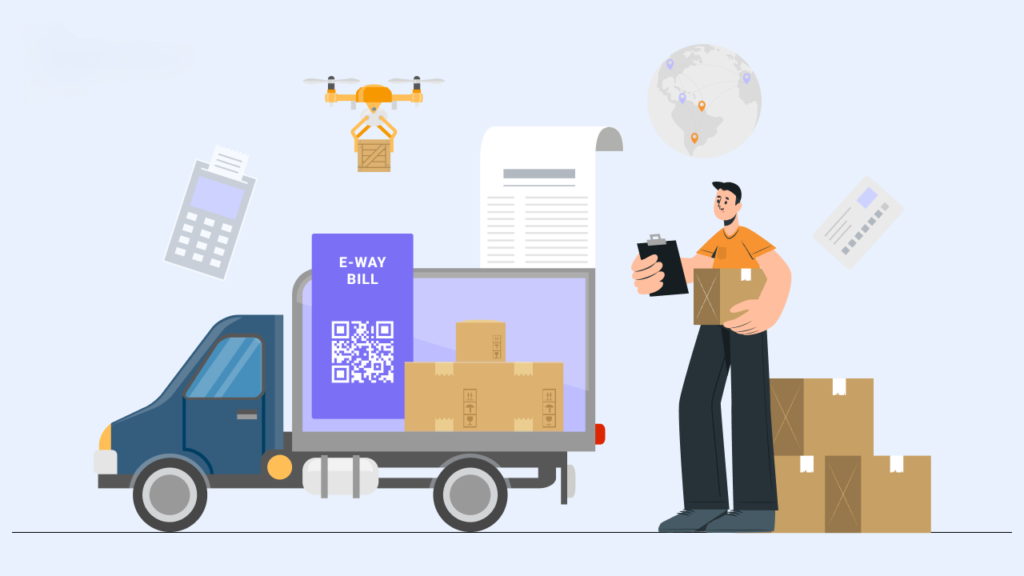
What is GST E-way Bill System
The GST e-way bill system is an electronic document required for the movement of goods valued over ₹50,000 within India. It’s a provision under the GST system to track the movement of goods and prevent tax evasion.
The e-way bill is generated on the GST portal and is required for both inter-state and intra-state movement of goods. The system aims to bring uniformity across the country in the compliance procedure for the movement of goods.
Legal Helpzyn offers professional assistance for GST e-way bill compliance. We help you generate and manage e-way bills for the transportation of goods, ensuring accurate details and timely submission. Our team ensures that all the required documentation is in order, reducing the risk of penalties and ensuring smooth movement of goods in compliance with GST regulations. Trust Legal Helpzyn for hassle-free GST e-way bill management.
Importance of generating E-way Bill System
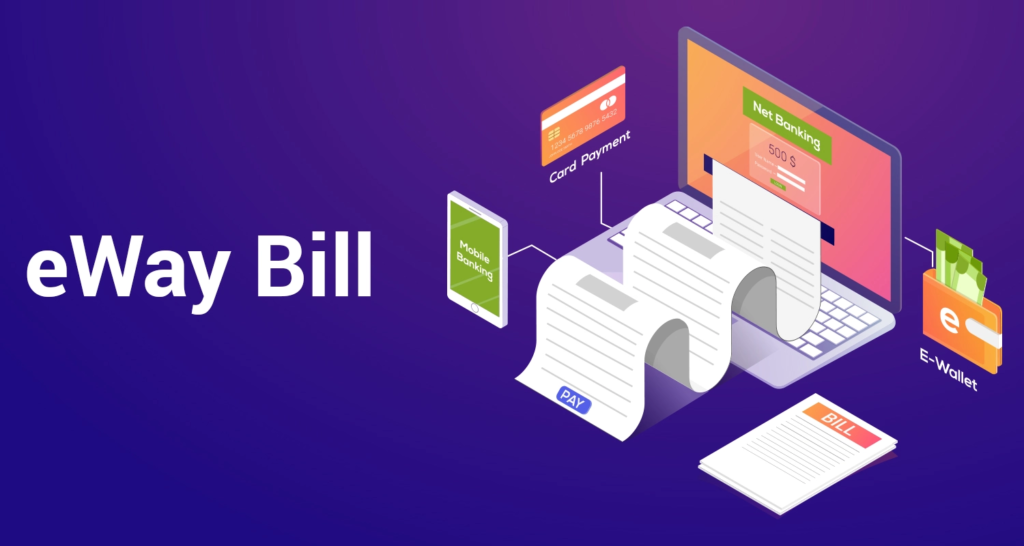
Generating an e-way bill is important because:
- Legal Compliance: It’s required under GST laws.
- Tax Transparency: Reduces tax evasion.
- Smooth Movement: Facilitates faster transport of goods.
- Fewer Delays: Minimizes check-post hold-ups.
- Tracking: Allows real-time monitoring of shipments.
- Avoiding Penalties: Helps prevent legal issues.
- Reputation: Enhances business credibility.
GST E-way bill with Legal Helpzyn
Apply for GST E-way bill System
GST E-way Bill Filing
₹12000
₹6000
An electronic mechanism for tracking the movement of goods worth over a specified value during transit.
Who Needs an E-way Bill?
- Every registered person under GST
- Registered person is consignor or consignee (mode of transport may be owned or hired) or is recipient of goods
- Registered person is consignor or consignee and goods are handed over to transporter of goods
- Transporter of goods
- An unregistered person under GST and recipient is registered
Validity of E-way Bill
The validity period varies based on the distance:
- An e-way bill is valid for periods as listed below, which is based on the distance traveled by the goods
- Validity is calculated from the date and time of generation of e-way bill
- For every 100 KMs or part of its movement, one day validity has been provided
- For movement of Over Dimensional Cargo vehicles, for every 20 KMs or part of its movement, one day validity is provided
Documents or Details Required to Generate e-Way Bill
- Invoice/ Bill of Supply/ Challan related to the consignment of goods
- Transport by road – Transporter ID or Vehicle number
- Transport by rail, air, or ship – Transporter ID, Transport document number, and date on the document
Cases When e-Way Bill is Not Required
- The mode of transport is non-motor vehicle
- Goods transported from Customs port, airport, air cargo complex or land customs station to Inland Container Depot (ICD) or Container Freight Station (CFS) for clearance by Customs
- Goods transported under Customs supervision or under customs seal
- Goods transported under Customs Bond from ICD to Customs port or from one custom station to another
- Transit cargo transported to or from Nepal or Bhutan
- Movement of goods caused by defense formation under Ministry of defense as a consignor or consignee
- Empty Cargo containers are being transported
- Consignor transporting goods to or from between place of business and a weighbridge for weighment at a distance of 20 kms, accompanied by a Delivery challan
- Goods being transported by rail where the Consignor of goods is the Central Government, State Governments or a local authority
- Goods specified as exempt from E-Way bill requirements in the respective State/Union territory GST Rules
State-wise e-Way Bill Rules and Limits
- Inter-State movement of goods has seen rise in numbers of generation of e-way bills ever since its implementation began from 1st April 2018
- State-wise e-way bill rules has differed and changed from time-to-time
- Many States and Union Territories also joined the league in the generation of e-way bills for movement of goods within the State/UT
- However, reliefs have been provided to people of few States by way of exempting them from e-way bill generation in case of monetary limits falling below threshold amount or certain specified items
How to Generate GST e-Way Bill on Portal
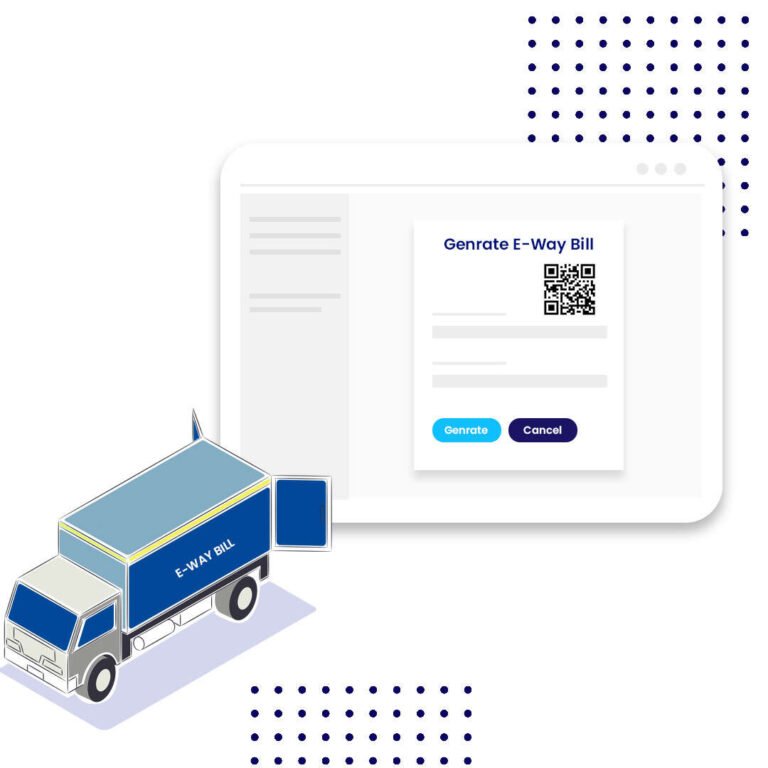
- E-Way Bill and the e-way bill number can be generated on the e-Way Bill Portal
- The user needs to fill in the details of Part A and Part B of FORM GST EWB-01
- The user can also generate e-way bill through SMS
- The user can also generate e-way bill through Android App
- The user can also generate e-way bill through site-to-site integration through API
Advantages of generating GST E-way Bill through Legal Helpzyn
Ease of Use: Our Experts often provide user-friendly platforms, simplifying the e-way bill generation process.
Expert Guidance: We offer assistance with compliance, ensuring all necessary details are correctly filled.
Time-Saving: Automating the process reduces the time spent on manual entries and paperwork.
Error Reduction: Our Expert often have systems in place to minimize mistakes, ensuring accurate bills.
Real-Time Updates: In Legal Helpzyn, we provide real-time tracking and updates on the status of e-way bills.
Integration: We integrate with existing systems, streamlining overall logistics and inventory management.
Support: In Legal Helpzyn, our experts are always ready to provide customer support, helping to resolve issues quickly and enhancing operational efficiency.
Frequently Asked Questions(FAQs)
No, you cannot add two invoices to a single e-way bill. Each e-way bill must correspond to a single invoice for the movement of goods. If you have multiple invoices, you will need to generate separate e-way bills for each one.
An e-way bill is required when the value of goods being transported exceeds ₹50,000. It applies to inter-state and intra-state movements.
E-way bills can be generated through the GST portal, using a mobile app, or through third-party software. You need details like invoice number, date, and transportation mode.
Failure to generate an e-way bill can result in penalties, fines, and confiscation of goods during transit.
The validity of an e-way bill depends on the distance of transportation. Typically, it is valid for 1 day for every 100 km of travel.
Yes, an e-way bill can be edited within 24 hours of generation. It can be canceled within 24 hours if the goods have not been transported.
You need details such as the GSTIN of the supplier and recipient, invoice number and date, value of goods, and transportation details.
No, e-way bills are not required for exports, but they are necessary for domestic transportation of goods.
You can track an e-way bill through the GST portal by entering the e-way bill number.
You can retrieve it from the GST portal using the e-way bill number or invoice details.
The recipient must ensure that the e-way bill is generated for the goods they receive, as it is part of the compliance process.
Yes, a single e-way bill can be used for inter-state transport, but each invoice still requires its own e-way bill.