
About One Person Company
A One Person Company (OPC) is a type of business structure that allows a single individual to operate a company, similar to a sole proprietorship, but with certain legal protections and benefits that come with being a registered company. This concept is popular in many countries, but it was introduced in India under the Companies Act, 2013 as a means to encourage entrepreneurship and ease the process of starting a business for a single person.
Set up Your company with Legal Helpzyn
Need Help for One Person company
One Person Company
₹36000
₹18000
A one-person company is solely owned and operated by one individual.
Limited Liability: The owner’s personal assets are protected from business liabilities, meaning they are not personally responsible for the company's debts.
Single Ownership: The owner has complete control over the business, allowing for quick decision-making without the need for consensus.
Separate Legal Entity: An OPC is recognized as a separate legal entity, which can own property, enter contracts, and sue or be sued in its own name.
Tax Benefits: OPCs may benefit from lower corporate tax rates compared to personal income tax rates for sole proprietorships.
Easy Compliance: OPCs typically have fewer compliance requirements compared to private limited companies, making them easier to manage.
Continuity: The business can continue even after the owner's death or incapacity, as it can be converted into a private limited company.
Credibility: Having "Company" in the name can enhance the business's credibility with customers, suppliers, and potential investors.
Obtain Digital Signature Certificate (DSC):
- Required for signing electronic documents.
- Apply through authorized agencies.
Obtain Director Identification Number (DIN):
- Unique ID for directors.
- Apply online via the Ministry of Corporate Affairs (MCA) website.
Choose a Unique Company Name:
- Ensure it reflects your business and complies with naming guidelines.
- Check availability on the MCA website and reserve it.
Prepare Required Documents:
- Identity Proof (Aadhar, passport)
- Address Proof (utility bill, rental agreement)
- Memorandum of Association (MoA)
- Articles of Association (AoA)
- No Objection Certificate (if applicable)
File Incorporation Documents:
- Submit MoA, AoA, and other forms online through the MCA portal.
Pay Registration Fees:
- Fees vary based on authorized capital, payable online.
Obtain Certificate of Incorporation:
- Received after approval, officially establishing your OPC.
Apply for PAN and TAN:
- Necessary for tax purposes; apply online through the Income Tax Department.
Open a Bank Account:
- Use your Certificate of Incorporation and PAN to open a current account.
Maintain Compliance:
- File annual returns, maintain books of accounts, and file income tax returns.
Identity Proof of Sole Member: Aadhar Card, Passport, Voter ID, or Driver's License.
Address Proof of Sole Member: Utility Bill, Bank Statement, or Rental Agreement.
Photograph: Recent passport-sized photos.
Memorandum of Association (MoA): Document outlining the company’s objectives.
Articles of Association (AoA): Rules governing the company.
Declaration by Subscriber: Statement confirming no membership in another OPC.
No Objection Certificate (NOC): From landlord if the registered office is rented.
Proof of Registered Office Address: Utility bill or lease agreement.
Digital Signature Certificate (DSC): Required for electronic signatures.
Director Identification Number (DIN): Unique ID for the director.
One Person Company Registration Process
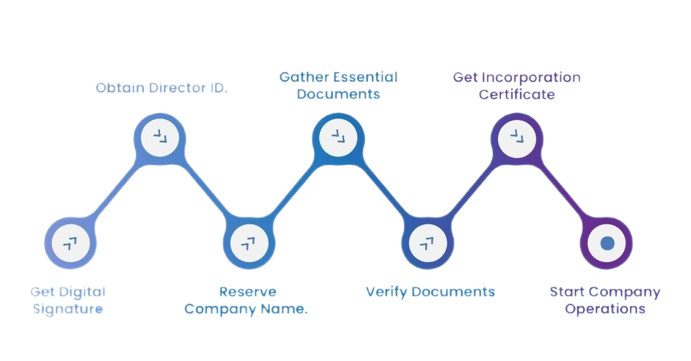
The director will need to obtain a Class 3 digital signature certificate from a certified certifying authority. This is required for filing the incorporation documents online. This includes incorporating the OPC, filing annual returns, making changes to the company’s documents, and interacting with government portals.
The first step is to obtain a Director Identification Number (DIN) for the individual who will be the sole director of the OPC. This can be done online through the Ministry of Corporate Affairs (MCA) portal.
Choose a unique name for your OPC and reserve it with the Registrar of Companies (RoC). You can check the availability of names on the MCA portal.
You will need to prepare the following documents:
- PAN Card of the director
- Aadhaar Card of the director
- Proof of registered office address
- No Objection Certificate (NOC) from the owner of the property where the registered office will be located
- Affidavit of director confirming no criminal charges or pending cases
- Digital signature certificate (DSC) of the director
The RoC will verify the documents submitted with the application form. Make sure all documents are accurate and complete.
Once all documents are verified, the RoC will issue an Incorporation Certificate, signifying the registration of your OPC.
This involves opening a bank account in the company’s name, obtaining necessary licenses and permits, hiring employees if required, setting up an office, developing business strategies, and starting operations. It’s crucial to maintain accurate records, comply with statutory requirements, and file annual returns and financial statements.After obtaining the Incorporation Certificate, you can start the operations of your OPC.
Frequently Asked Questions (FAQs)
1.What is a One Person Company (OPC)?
A One Person Company (OPC) is a type of business entity that allows a single individual to operate a business with limited liability. It is a separate legal entity from its owner and is governed by the Companies Act, 2013 in India.
2. What are the advantages of an OPC?
- Limited Liability: The owner’s liability is limited to the extent of their shareholding in the company, which protects personal assets.
- Single Ownership: The company can be owned and managed by a single person, providing greater control and flexibility.
- Separate Legal Entity: The OPC is distinct from its owner, meaning it can own property, incur liabilities, and enter contracts in its own name.
- Easier Access to Funding: OPCs are considered more credible than sole proprietorships, making it easier to attract investors and access loans.
- Tax Benefits: OPCs enjoy tax advantages available to companies under the Income Tax Act, such as lower corporate tax rates.
3. Who can form an OPC?
- Any individual who is a resident of India (i.e., has stayed in India for more than 182 days during the preceding financial year) can form an OPC.
- The sole member of an OPC cannot be a minor.
4. What are the requirements for incorporating an OPC?
- Director: An OPC must have one director, who is also the sole shareholder.
- Nominee: The OPC must appoint a nominee who will take over the operations of the company in case of the death or incapacity of the sole shareholder.
- Registered Office: The company must have a registered office in India.
5. Can an OPC have more than one director or shareholder?
No, an OPC can only have one director and one shareholder. However, the sole shareholder can appoint a nominee, who will take control of the company in case of the shareholder’s death or incapacity.
6. Can an OPC convert into a private or public company?
Yes, an OPC can be converted into a private or public company when the paid-up share capital exceeds ₹50 lakh or if the annual turnover crosses ₹2 crore. Such conversion is subject to certain procedural requirements.
7. What is the role of a nominee in an OPC?
A nominee is a person appointed by the sole member of the OPC who will take over the company’s ownership and management in case of the death or incapacity of the sole member.
8. What is the difference between a Sole Proprietorship and an OPC?
- Sole Proprietorship: Owned and managed by one person, who has unlimited liability.
- OPC: A single individual owns and controls the company, but the liability is limited, and it is a separate legal entity with its own legal identity.
9. What are the tax implications for an OPC?
- An OPC is taxed like a private limited company, and corporate tax rates apply.
- It is eligible for benefits such as a lower tax rate compared to individual income tax rates.
- The OPC must file annual returns and financial statements with the Registrar of Companies (RoC).
10. What is the annual compliance requirement for an OPC?
- Filing of Financial Statements: OPCs are required to file their financial statements (Balance Sheet, Profit & Loss Account) with the Registrar of Companies every year.
- Board Meetings: Since there is only one director in an OPC, no formal Board Meetings are required.
- Annual Return: OPCs must file an annual return with the RoC, which includes information about directors, shareholders, and business activities.
11. Can an OPC issue shares to the public or raise funds from the public?
No, an OPC cannot raise funds from the public or issue shares to the public. Its shares can only be held by the sole shareholder and a nominee. However, it can seek funding through private sources like bank loans or venture capital.
12. Can an OPC be converted into a Limited Liability Partnership (LLP)?
An OPC cannot be converted directly into an LLP. However, it can be converted into a private limited company or public limited company, and then the company may opt to convert into an LLP, subject to compliance with legal formalities.
13.What happens to an OPC in case of the owner’s death or incapacity?
In the event of the death or incapacity of the sole member of the OPC, the appointed nominee steps in to take over the management and affairs of the company. The nominee will inherit the membership and take over the operations of the company.
14. Can an OPC have a foreign director or shareholder?
The shareholder of an OPC must be an Indian citizen and resident of India. However, a foreigner can be appointed as a director of the OPC, subject to the condition that the majority of the directors (at least one) are Indian residents.
15. How is an OPC different from a private limited company?
- Ownership: A private limited company requires at least two members, whereas an OPC has a single member.
- Compliance: OPCs have fewer compliance requirements compared to private limited companies, making them easier to manage.
- Management: OPCs are typically managed by a single person, while private limited companies must have at least two directors.